












THE BALKANS:
ANCIENT BULGARIA AND ROMANIA
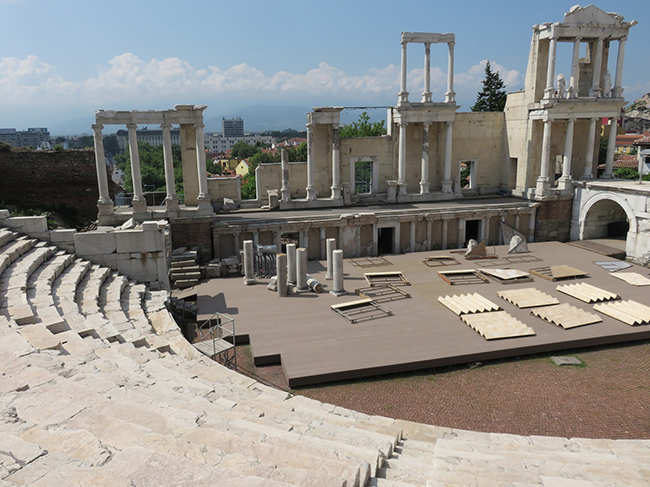
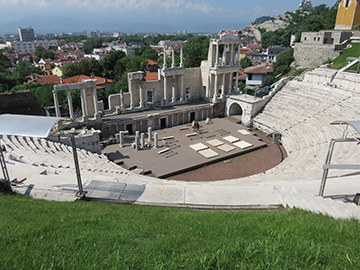
Plovdiv Roman theatre
Trajan, having crossed the Ister (Danube) by means of the bridge, conducted the war with safe
prudence rather than with haste, and eventually, after a hard struggle, vanquished the Dacians.
In the course of the campaign he himself performed many deeds of good generalship and
bravery, and his troops ran many risks and displayed great prowess on his behalf ... Decebalus,
when his capital and all his territory had been occupied and he was himself in danger of being
captured, committed suicide; and his head was brought to Rome. In this way Dacia became
subject to the Romans, and Trajan founded cities there. The treasures of Decebalus were also
discovered, though hidden beneath the river Sargetia (modern Strei), which ran past his palace.
With the help of some captives Decebalus had diverted the course of the river, made an
excavation in its bed, and into the cavity had thrown a large amount of silver and gold and other
objects of great value that could stand a certain amount of moisture; then he had heaped stones
over them and piled on earth, afterwards bringing the river back into his course.
Cassius Dio, The Dacian Campaign, Roman History, Book 68:14
prudence rather than with haste, and eventually, after a hard struggle, vanquished the Dacians.
In the course of the campaign he himself performed many deeds of good generalship and
bravery, and his troops ran many risks and displayed great prowess on his behalf ... Decebalus,
when his capital and all his territory had been occupied and he was himself in danger of being
captured, committed suicide; and his head was brought to Rome. In this way Dacia became
subject to the Romans, and Trajan founded cities there. The treasures of Decebalus were also
discovered, though hidden beneath the river Sargetia (modern Strei), which ran past his palace.
With the help of some captives Decebalus had diverted the course of the river, made an
excavation in its bed, and into the cavity had thrown a large amount of silver and gold and other
objects of great value that could stand a certain amount of moisture; then he had heaped stones
over them and piled on earth, afterwards bringing the river back into his course.
Cassius Dio, The Dacian Campaign, Roman History, Book 68:14
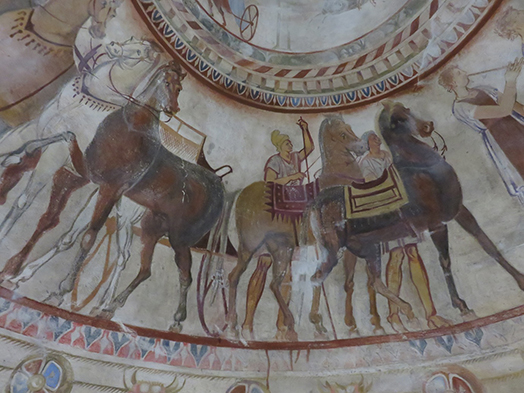
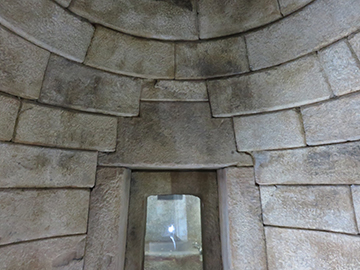
Painted Thracian tomb at Kazanluk
THE TOUR
This three-week tour of the Balkans has an emphasis on the ancient history and archaeology of Bulgaria and Romania. We start in Sophia, the capital of Bulgaria. Here we visit the interesting Roman ruins of ancient Serdica, buried under the modern town. We also visit the excellent National Archaeology Museum which contains numerous finds from the Palaeolithic Period down to late antique times including stunning Thracian gold artefacts. In Sophia we also visit the Boyana Church and the St George Rotunda.
Our travels next take us to Plovdiv, the ancient settlement known as Philippopolis after its founder Philip II of Macedon. The site contains some well-preserved Greek and Roman remains including a theatre. We also visit the Archaeology Museum to see further Thracian treasures. The following day we explore the medieval Old Town which preserves Ottoman era houses and see the Nebet Tepe fortress which developed over the ancient tell mound.
We next head east to Kazanlak, where we visit the 'Valley of the Thracian Kings'. We explore some of the Thracian tombs and a replica of the most famous one. We visit the site museum which contains numerous treasures from the region.
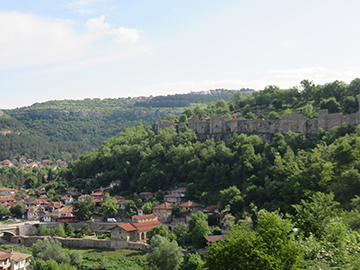
The following day we head through the Balkan Mountains to the town of Veliko Tarnovo. This was an important medieval capital, and the Tsarevets Fortress is well preserved. We have a walk through the old town and explore the craft quarter. We then head north to the town of Ruse on the Danube River. On the way we stop to see the Roman remains of Nicopolis ad Istrum, a settlement founded by Trajan. In Ruse we see the regional archaeology museum which has Roman artefacts and visit the ruins of Sexaginta Prista. We also have a wander through the Austro-Hungarian quarter and take a short cruise on the Danube.
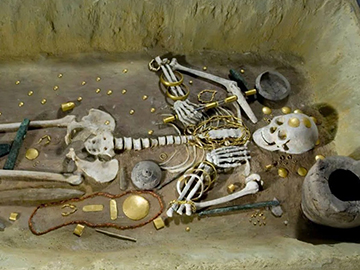
We head next to Varna in the east of Bulgaria. This was an ancient Roman settlement and today one sees two imposing Roman baths, city walls and a 5th Century basilica. The local archaeology museum contains the golden treasures from the Chalcolithic necropolis at the site.
We cross into Romania and head to Constanta on the shore of the Black Sea. This was the ancient settlement of Tomis which was founded originally as a Greek colony in the 6th Century BC. We explore the ancient walls, a 4th Century basilica, mosaic floors and see the finds from the necropolis. We also take a walk in the medieval town and see the local archaeology museum. The following day we head north to Histria, originally a Greek colony and later elaborated in roman times. We also see a 14th Century Genoese fortress.
We next fly to western Romania, to visit the region of Transylvania. We explore the medieval walled town of Brasov and visit the 'Black Church'. Nearby is Bran Castle, traditionally associated with Count Dracula but not actually connected with Vlad the Impaler. In Sibiu we have a look at the Germanic architecture of this lovely 12th Century town, exploring the walls, houses and towers.
The following day we head to Alba Iulia which is the site of the Roman legionary camp of Apulum, founded by Trajan, and its associated civilian settlement. We explore the ancient remains and visit the site museum. We then head south to Sarmizegetusa. This was the ancient Dacian capital and nearby lies the Roman settlement of the same name. The excavations have revealed a Capitolium, Roman baths and amphitheatre.
Our tour concluded in Bucharest, the capital of Romania. Here we see the National History Museum which contains replicas of reliefs from Trajan's Column in Rome as well as Roman finds and numerous golden treasures from Dacian tombs. We also see the Curtea Veche, the old palace of the 15th Century and mid-18th Century Stavropoleos Monastery.
ITINERARY*
Day 1: Arrive SophiaYou should arrive in Sophia, the capital of Bulgaria and check into our hotel. Overnight Sophia.
Day 2: Sophia - ancient Serdica, the National Archaeology Museum
In the morning, we explore the ruins of ancient Serdica, a Roman city buried under modern Sophia. This includes remains of an amphitheatre and residential buildings. In the afternoon we visit the National Archaeology Museum of Bulgaria which is housed in an Ottoman mosque. Finds include material from Palaeolithic times including superb Thracian gold treasures (5th-3rd Century BC). Overnight Sophia.
 |
 |
Thracian gold in the National Museum in Sophia |
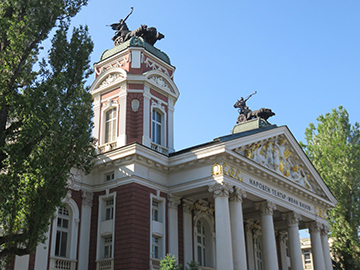
National Theatre in Sophia |
Day 3: Sophia - Boyana Church - St George Rotunda
The morning is spent exploring part of late antique Sophia. We see the St Sophia church which was built in the reign of the Emperor Justinian. Later we visit the St George Rotunda built in the 4th Century. In the afternoon we drive from Sophia to Plovdiv. Overnight Plovdiv.
Day 4: Plovdiv - Roman theatre and stadium - Archaeology Museum
Today we see the Roman ruins of Plovdiv, the ancient city of Philippopolis founded by Philip II of Macedon. These remains include a well-preserved theatre and parts of a stadium. We also see the Small Basilica of the 5th Century with its mosaic decoration. In the afternoon we visit the excellent Archaeology Museum which includes golden treasures from Thracian tombs, and a silver cavalry mask. Overnight Plovdiv.
Day 5: Plovdiv - Old Town houses - Nebet Tepe Fortress
In the morning we take a walk through the medieval city of Plovdiv which includes beautiful, restored Ottoman houses and an 11th Century city gate. We visit the Nebet Tepe Fortress, built on the ruins of the Neolithic town mound. It was developed from the Hellenistic period onwards. In the afternoon we drive to Kazanlak. Overnight Kazanlak.
Day 6: Kazanlak - Thracian tombs - Museum
Today we visit the 'Valley of the Thracian Kings'. Here we explore the Kazanlak tomb (we see the replica) with its frescoed ceiling, and we also see the tomb of King Seuthes III which was only discovered in 2004. In addition, we see the Golyama Kosmatka tomb and the Ostrusha tomb, as well as the Kazanlak Museum which houses numerous treasures from the region. Overnight Kazanlak.
 |
 |
The Greco-Roman theatre of Plovdiv |
Kazanluk Thracian tomb |
Day 7: Balkan Mountains - Veliko Tarnovo
This morning, we drive from Kazanlak through the scenic Balkan Mountains via the Shipka Pass to the town of Veliko Tarnovo. This was one of the medieval capitals of Bulgaria. Here we see the remarkable Tsarevets Fortress and the old town which still preserves 400 houses and 18 churches. In the afternoon we explore the Samovodska Charshiya craft quarter. Overnight Veliko Tarnovo.
Day 8: Nicopolis - Ruse - Museum - Sexaginta Prista - Danube cruise
Today we head north to see the Roman ruins of Nicopolis Ad Istrum, a settlement founded by Trajan. Afterwards we head to the Danube port city of Ruse. Here we see the regional archaeology museum which includes a collection of Roman stelae. We then visit the remains of the Danube Roman fortress of Sexaginta Prista. We also see some of the Austro-Hungarian architecture in the old city and take a short afternoon cruise on the Danube River. Overnight Ruse.
Day 9: Varna - Roman city remains - Gold treasure Museum
In the morning we drive from Ruse to Varna. In Varna we visit the impressive remains of two Roman baths, the Roman city walls and a 5th Century basilica. In the afternoon we see the remarkable gold treasures from the Necropolis of Varna in the local Archaeology Museum. Dating to the Chalcolithic period (late 5th millennium BC), these objects reflect a wealthy ancient society. Overnight Varna.
 |
 |
Tsarevets Fortress in Veliko Tarnova |
Golden treasures from Varna |
Day 10: Cross into Romania - Constanta
In the morning we head north to the border with Romania. After crossing the border we continue our journey to Constanta. The ancient city was founded by Greek colonists in the 6th Century BC. In the afternoon we take a walk through the beautiful medieval town which lies on a peninsula projecting into the Black Sea. Overnight Constanta.
Day 11: Constanta - Archaeology Museum - Mosaic edifice - Tomis
Today we visit the Archaeological Museum of Constanta with its collection of Greek, Roman, and Byzantine finds. We also see the Roman Mosaic Edifice which preserves a large Roman mosaic floor. After lunch we explore the ancient ruins of Tomis, remnants of the 6th Century BC Greek colony and later a major Roman port. We see the Romano-Byzantine wall, 4th Century basilicas, mosaic floors, and a recently excavated necropolis which produced rare artifacts. Overnight Constanta.
Day 12: Histria - ancient city - Enisala medieval fortress
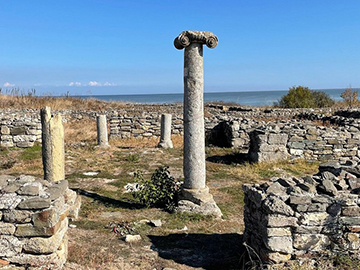
Today we have a day excursion to explore the ancient city of Histria, located on the shore of the Black Sea. It was founded by the Ionian city of Miletos in the 7th Century BC and remained a major trading post for 1300 years. We see its fortifications, residences, temples to Zeus and Aphrodite, and site museum. After lunch we visit the 14th Century Genoese Enisala Fortress which has wide ranging views including over the Black Sea. Overnight Constanta.
 |
 |
Ruins of Histria |
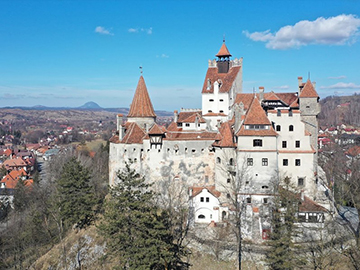
Bran Castle |
Day 13: Brasov - walk in old city
This morning we fly (via Bucharest) from Constanta to Brasov, a medieval city located nestled in the wooded Carpathian Mountains of southern Transylvania. In the afternoon we explore the centre of the old walled city, taking a walk in the old quarter and visiting the 'Black Church'. There is a lovely view from the White Tower. Overnight Brasov.
Day 14: Bran Castle - Sibiu
In the morning we visit the 14th Century Bran Castle, associated by Bram Stoker with Dracula (but not actually connected with Vlad the Impaler). We continue our drive in the afternoon to Sibiu. The old town is known for its Germanic architecture, a legacy of 12th Century Saxon settlers. Around the city are the remains of medieval walls and towers, including the 13th Century Council Tower. Overnight Sibiu.
Day 15: Apulum legionary fortress
In the morning we head north to see the Roman ruins of Apulum which lie buried under Alba Iulia. There is a well preserved Roman legionary camp, base of the 13th Legion, which was established by Trajan. The castrum covers 37.5 hectares. We also visit the adjacent Roman settlement and site museum. In the afternoon we drive to Sarmizegetusa. Overnight Sarmizegetusa.
Day 16: Sarmizegetusa - ancient Dacian remains - Roman ruins
This morning, we explore the site of Sarmizegetusa Regia, the ancient Dacian capital in the pre-Roman period. Here we see the Dacian fortress and sacred area. In the afternoon we visit the nearby Roman ruins of Sarmizegetusa, capital of the Roman province of Dacia, which was founded by the Emperor Trajan. We explore the forum with its Capitolium, Roman baths and amphitheatre. Overnight Sarmizegetusa.
 |
 |
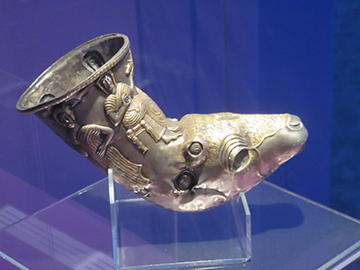
Treasures in the National Museum in Bucharest |
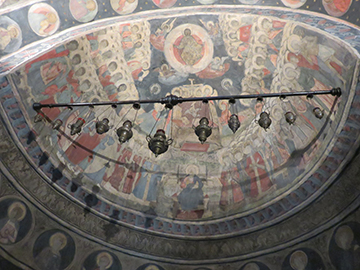
Stavropoleos Monastery |
Day 17: Fly to Bucharest - National History Museum
We fly to Bucharest this morning. The afternoon is dedicated to the National History Museum which has a replica of Trajan's Column, and numerous Dacian archaeological finds. These include golden treasures from Dacian tombs. Overnight Bucharest.
Day 18: Bucharest - Curtea Veche palace - Stavropoleos Monastery
In the morning, we visit the Curtea Veche, the old palace built by Vlad III Dracula in 1459. After lunch we take a walk in the Old City and see the historic Stavropoleos Monastery, built for Orthodox nuns in 1724. Its architecture, murals and stonework are a testament to Byzantine traditions. We end the tour with a visit to the markets of Bucharest for last minute shopping. Overnight Bucharest.
Day 19: Departure from Bucharest
Departure from Bucharest.
* Please note that the Company reserves the right to make alterations to the itinerary in the period up to 60 days prior to a tour departure. The itinerary may also be subject to minor re-arrangement due to the scheduling of the operators and availability of access. If this occurs, the Company will endeavour to provide a comparable alternative.