












NORTHERN INDIA:
RAJASTHAN AND THE MUGHULS
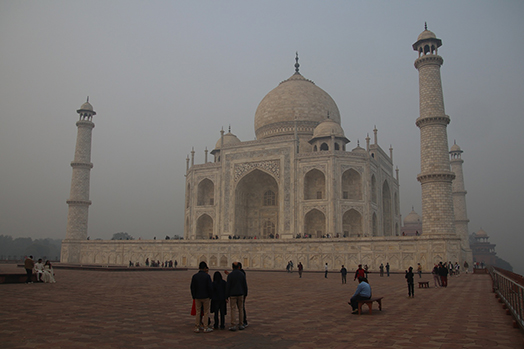
The Taj Mahal in Agra
Alone you stand
Surrounded by silence
Serene, scintillating
Calm and composed...
Your silence fascinates me!
How Mysterious!
How Alluring you are!
You'll always stand out in my memory!
Bejeweled with golden sands
and the starry sky above,
Like a love-lorn lady,
Seems you have been waiting...
for the arrival of your love!
Charismatic & captivating,
You are suavely charming.
In the midst of the sun-kissed sand dunes,
Alone you sigh!
Alone you sing the songs of solitude!
Your silence speaks in volumes to me...
Oh Jaisalmer! I am earnestly imbued!
Surrounded by silence
Serene, scintillating
Calm and composed...
Your silence fascinates me!
How Mysterious!
How Alluring you are!
You'll always stand out in my memory!
Bejeweled with golden sands
and the starry sky above,
Like a love-lorn lady,
Seems you have been waiting...
for the arrival of your love!
Charismatic & captivating,
You are suavely charming.
In the midst of the sun-kissed sand dunes,
Alone you sigh!
Alone you sing the songs of solitude!
Your silence speaks in volumes to me...
Oh Jaisalmer! I am earnestly imbued!
'Jaisalmer' by Monalisa Biswas
THE TOUR
This 3-week study tour examines the history and archaeology of Northern India with an emphasis on Delhi and the state of Rajasthan. The tour begins with three days in Delhi where we explore the history of this fascinating city. We start with the Qutub Minar complex, an early 13th Century mosque and enormous minaret, built on the ruins of Hindu temples. We then see the impressive walls of Tughluqabad, a 14th Century fortified city in the southern part of Delhi. We also see a number of pre-Mughal tombs, now housed within the Lodi Gardens.
The next two days are spent exploring the Mughal monuments of Delhi. We start with the stunning mid 16th Century Tomb of the Mughal Emperor Humayun which is set within extensive gardens. The nearby Humayun Museum contains beautiful artefacts relating to Mughal culture. We also visit the mid 18th Century Safdarjung Tomb, a private monument of the late Mughal period. The following day we explore the Purana Qila fortress built by Humayun on the ancient tell mound of Delhi. It contains an impressive mosque and the library of Huymayun. We visit the remarkable Red Fort of Delhi built by the Mughal Emperor Shah Jahan, explore the nearby Great Mosque and wander the nearby markets of Delhi.
We leave Delhi and head south to Agra. In the afternoon, we visit two splendid early Mughul tombs; the Tomb of the Emperor Akbar, and the Tomb of Itimad ud-Daula on the edge of the Yamuna River. The later tomb, an exquisite jewelbox, was built for the Father-in-law of the Emperor Shah Jahan. The following day we explore two masterpieces of Mughal architecture. We begin with the Taj Mahal, built by Emperor Shah Jahan for his wife Mumtaz Mahal. In the afternoon we explore the Agra Fort, a remarkable example of Mughal military architecture.
The following day is an excursion south to Gwalior to visit the impressive Gwalior Fort. This contains a well preserved example of a 15th Century Hindu palace, together with Jain rock carvings and a number of Hindu Temples. We next head to Fatehpur Sikri. This was a palace complex built by the Mughal Emperor Akbar in the 1570s and abandoned shortly after. We continue our journey west, stopping to see the city palace of Karauli, a Vishnu Temple and a remarkable step-well.
We next spend two days exploring some of the historical heritage of Jaipur. This 'pink city' was founded in the early 18th Century and has a well-preserved palace complex. It is famous for the Hawa Mahal façade of the harem. We also visit the Albert Hall Museum. The following day we visit the impressive Amber Fort, an enormous palace complex north of Jaipur. In the afternoon we see the nearby Samode Palace, a beautiful 19th Century complex hidden in the Arvalli Hills.
Our route then takes us to Pushkar, a pilgrimage centre around the edge of a lake. This is the main centre for the worship of Brahma, whose temple we can visit. There are extensive markets to explore. We then head south to Chittorgarh, site of one of the most impressive, fortified cities in India. It reached its present form in the mid 15th Century. Inside are Jain and Hindu temples to explore.
We now spend two days in the city of Udaipur, built around the edge of a lovely man-made lake. We take a boat ride to the beautiful Jagmandir pleasure palace located on an island. We then see the City palace complex which lies along the edge of the lake shore. In the afternoon we visit the Ahar Archaeological Museum. The following day is free to explore the many historic sites in the area of our hotel. You can see an impressive Haveli, the Jagdish temple of Vishnu or go for a walk along the lake.
Our journey next takes us north to Ranakpur where we visit the enormous Jain Temple. It was erected in the mid 15th Century and is an impressive example of architecture, with pillared halls and numerous representations of Jain saints. From here we continue to Jodhpur. We visit the scenic marble chattris of Maharaja Jaswant Singh and then explore the enormous Mehrangarh Fort Palace, constructed on a pinnacle of rock, long used as the main royal residence. It contains a number of courtyards and palace rooms. We also see the current palace, known as the Umaid Bhavan.
The following day we head north of Jodhpur to Mandore to see the chattri memorials of the Jodhpur royal family. We continue westwards into the desert landscapes and arrive at Jaisalmer. The following day we explore the remarkable 12th Century fortress of Jaisalmer including its royal palace complex, Jain temples, and a number of havelis, grand mansions built by traders.
We fly back to Delhi. Here we explore the National Museum with its huge range of artefacts illustrating India's rich history. We see the 18th Century Jantar Mantar astronomical complex, and have some time to visit the main colonial buildings in New Delhi including India Gate, the Presidential palace and the Parliament.
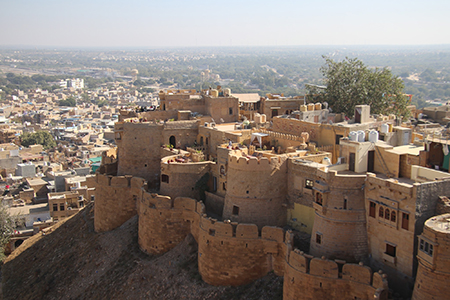
The fortress of Jaisalmer
ITINERARY*
Day 1: Arrive Delhi
You should arrive in Delhi. We will meet at 7pm in the lobby of our hotel to meet the group. Overnight Delhi.
Day 2: Delhi - Qutub Minar Complex - Tughluqabad - Lodi Gardens
The day is set aside to see the pre-Moghul monuments of Delhi. We start by exploring the remarkable Qutub Minar Complex with its 72m high tower constructed in 1202 under the first Sultan of Delhi. We then see the impressive fortifications of Tughluqabad, built in 1321. In the afternoon we visit the Lodi Gardens where we explore a number of superb tombs of the early 15th Century. Overnight Delhi.
Day 3: Humayun's Tomb - Humayun Museum - Safdarjung Tomb
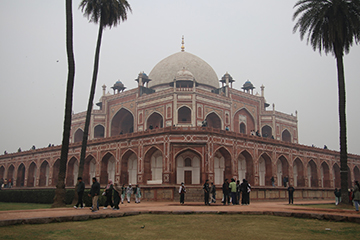
In the morning, we visited the splendid Tomb of the Moghul Emperor Humayun set in 30 acres of gardens. It is one of the great Moghul monuments. Surrounding it are numerous other garden tombs. Nearby is the newly built Humayun Museum which contains artefacts from the 16th Century. In the afternoon we Safdarjung Tomb, built in the 1750s. Overnight Delhi.
 |
 |
The tomb of Humayun |
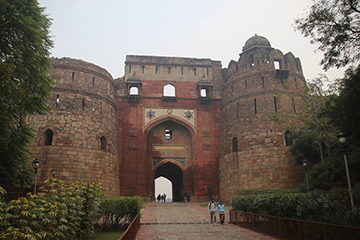
The Purana Qila fort |
Day 4: Delhi - Purana Qila Fort - Red Fort - Jama Masjid - walk in markets
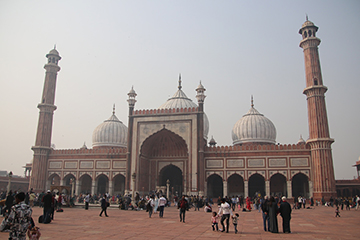
In the morning we see the monuments of the Purana Qila Fort built by Moghul Emperor Humayun in the 1530s. Inside the walls we see the mosque and library of Humayun. In the afternoon we visit the mid 17th Century Red Fort built by the Moghul Emperor Shah Jahan. We also see the Jama Masjid, the main mosque built in the early 17th Century and walk in the markets. Overnight Delhi.
Day 5: Agra - tomb of Akbar - Itimad ud-Daula tomb
In the morning we head south of Delhi to Agra. On the outskirts of the city we visit the superb tomb of the Moghul Emperor Akbar at Sikandra which was built in the early 17th Century. After lunch we visit the superb garden tomb complex of Itimad ud-Daula. His daughter married Moghul Emperor Shah Jahan. We explore some of the Agra markets. Overnight Agra.
 |
 |
The Great Mosque in Delhi |
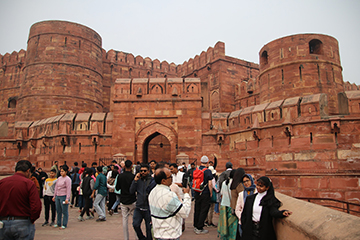
The Agra Fort |
Day 6: The Taj Mahal - Agra Fort
Today is spent exploring the great Moghul monuments of Agra. We start with the remarkable Taj Mahal, built for Mumtaz Mahal, the wife of Moghul Emperor Shah Jahan. It is often considered the pinnacle of Moghul architecture. In the afternoon we visit Agra Fort. It was built by Moghul Emperor Akbar and it became a major royal residence. Overnight Agra.
Day 7: Gwalior Fort
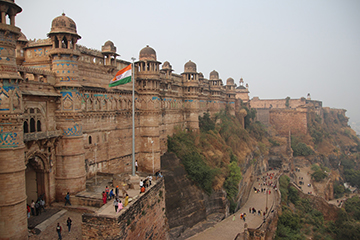
We head south of Agra for a day excursion to explore the spectacular Gwalior Fort and selected temples. The remarkable fortified plateau contains the 15th Century palace of Man Mandir, one of the most impressive pre-Moghul palaces in India. We also see Jain rock carvings from the 6th Century and the 11th Century Saas Bahu temples. Overnight Agra.
Day 8: Fatehpur Sikri - Temple and Step-well at Karauli
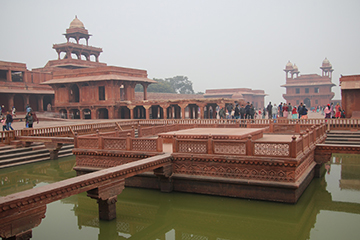
In the morning we head west to Fatehpur Sikri, the palace complex built by Moghul Emperor Akbar in the 1570s. it contains a series of palaces constructed of red sandstone, and nearby we also see the Jama Masjid, the impressive congregational mosque. We then stop to see the City palace of Karauli, the nearby Madan Mohan Temple and the adjoining Shahi Kund Stepwell. Overnight Jaipur.
 |
 |
Gwalior Fort |
The palace of Akbar at Fatehpur Sikri |
Day 9: Jaipur
The day is devoted to the remarkable 'pink-city' of Jaipur. This was founded in the early 18th Century by Maharaja Jai Singh II. We visit the extensive City Palace including the famous Hawa Mahal façade where the harem could watch the street. We also visit the Sisoda Queen's Palace, and the Victorian Albert Hall Museum which was built in the late 19th Century. Overnight Jaipur.
Day 10: Amber Fort - Samode Palace
We explore some of the historic buildings in the area of Jaipur. We start with the enormous Amber Fort which was built by Maharaja Man Singh from 1592 and extended by Maharaja Jai Singh I. A series of magnificent courtyards lead to the private quarters of the royal family. We then head north to Samode Palace, 33km from Jaipur. This 19th Century palace is hidden in the Arvalli Hills. Overnight Jaipur.
 |
 |
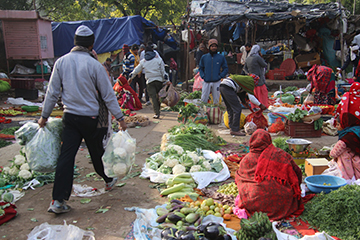
Jaipur markets |
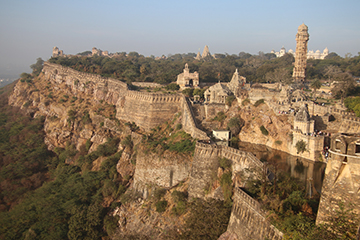
Chittorgarh Fort |
Day 11: Pushkar
In the morning we explore some of the markets of Jaipur. The city is famous for its stone carved statues and sweets. We then head NW to Pushkar. This pilgrimage centre has around 400 temples located around a lake sacred to Brahma. There is some free time to explore the extensive markets around the edge of the lake or visit the sacred ghats. Overnight Pushkar.
Day 12: Chittorgarh Fort
We head southwards from Pushkar to see the impressive hill town at Chittorgarh. The fortress reached its greatest form after 1433 under Rana Kumbha. Inside the walls are Jain and Hindu temples and palace complexes. In the afternoon we drive to Udaipur. Overnight Udaipur.
Day 13: Udaipur
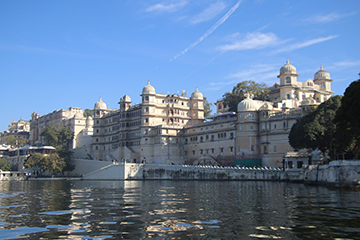
Today we explore the stunning city of Udaipur, famous for its man-made lakes. We start with a boat ride to the beautiful Jagmandir palace on an island in the lake, built in the 1550s. We then see the impressive City Palace complex, home of the local Sisodia Dynasty. We also visit the Ahar Archeological Museum which contains a collection of artefacts. Overnight Udaipur.
 |
 |
Lake palace in Udaipur |
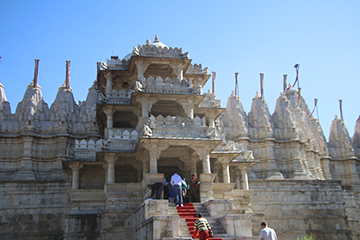
Jain temple at Ranakpur |
Day 14: Free day in Udaipur
This day is set aside for free time. You can go for a walk around the lake shore of Udaipur or walk to the Jagdish Vishnu Temple. You could also visit the Saheliyon Garden which was laid out in the 18th Century. Otherwise, you can just rest and relax. Overnight Udaipur.
Day 15: Ranakpur
We leave Udaipur and head northwards over the scenic Aravalli hills. We visit the Adinath Temple at Ranakpur, an enormous Jain complex completed in 1439. A multi-story building, there are 1444 finely carved columns with mythical figures. Overnight Jodhpur.
Day 16: Jodhpur
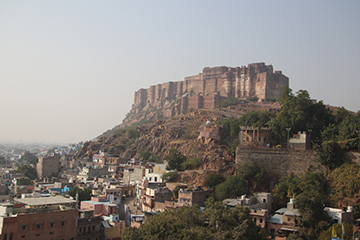
In the morning, we explore the stunning cultural heritage of Jodhpur. We start with the Jaswant Thada, the marble cenotaph of the Maharaja Jaswant Singh who died in 1895. We then visit the stupendous Mehrangarh Fort Palace. Seventeen generations of the Rathore Dynasty have lived here. We see a series of interconnected palaces and apartments arranged around courtyards. In the afternoon we see part of the Umaid Bhavan, a colossal royal Neo-classical palace built in the early 20th Century. Overnight Jodhpur.
 |
 |
The Mehrangarh Fort Palace in Jodhpur |
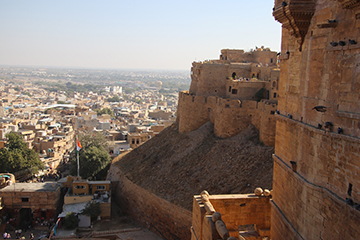
The fortress of Jaisalmer |
Day 17: Mandore - drive to Jaisalmer
We head north of Jodhpur to the small historic town of Mandore. Here we see the chattri memorials of the Jodhpur rulers of Marwar built in the 1890s. We continue our drive through an increasingly desert country to the oasis town of Jaisalmer. Overnight Jaisalmer.
Day 18: Jaisalmer
The day is spent exploring the spectacular 12th Century fortress of Jaisalmer, home of the ruling Bhatti Dynasty. The city was an important trading town and attracted numerous Jain teachers. We explore the historic buildings inside the fortress including the royal palace and a number of Jain temples. Overnight Jaisalmer.
Day 19: Jaisalmer - fly to Delhi
Today we have a walking tour through the old quarter of Jaisalmer. We explore some of the remarkable havellis, private houses belonging to rich merchants, including the impressive Patwon ki Haveli and the Salim Singh Haveli. In the afternoon we fly to Delhi. Overnight Delhi.
Day 20: Delhi - National Museum - Jantar Mantar - New Delhi
In the morning, we visit the National Museum of India in Delhi. We see the main archaeological finds that reveal the history of the nation. We also see the Jantar Mantar, an astronomical centre built by Maharaja Jai Singh of Jaipur in the mid 18th Century. In the afternoon we visit some of the key buildings of New Delhi including India Gate, the outside of the Presidential palace and the Parliament. Overnight Delhi.
Day 21: Depart Delhi
We depart Delhi.
* Please note that the Company reserves the right to make alterations to the itinerary in the period up to 60 days prior to a tour departure. The itinerary may also be subject to minor re-arrangement due to the scheduling of the operators and availability of access. If this occurs, the Company will endeavour to provide a comparable alternative.