












CYPRUS, RHODES, MALTA:
ANCIENT CULTURES AND THE KNIGHTS OF ST JOHN
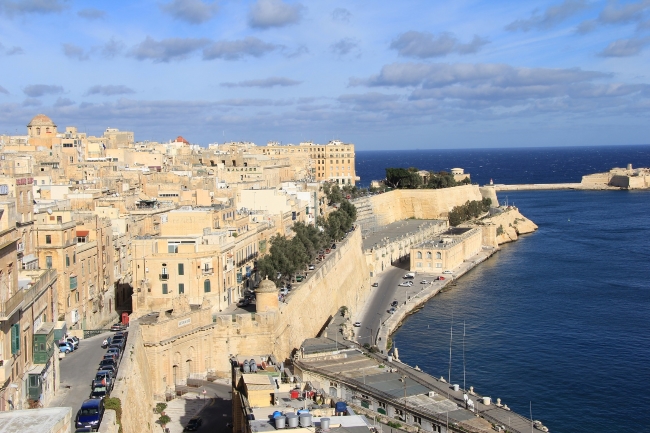
Grand harbour in Valletta
Oh, nobly shone the fearful cross upon your mail afar,
When Rhodes and Acre hailed your might, O lions of the war!
When leading many a pilgrim horde, through wastes of Syrian gloom;
Or standing with the cherub's sword before the holy tomb.
Yet on your forms the apron seemed a nobler armor far,
When by the sick man's bed ye stood, O lions of the war!
When ye, the high-born, bowed your pride to tend the lowly weakness,
The duty, though it brought no fame, fulfilled by Christian meekness--
Religion of the cross, thou blend'st, as in a single flower,
The twofold branches of the palm--humility and power.
Friedrich Schiller, The Knights of St John
When Rhodes and Acre hailed your might, O lions of the war!
When leading many a pilgrim horde, through wastes of Syrian gloom;
Or standing with the cherub's sword before the holy tomb.
Yet on your forms the apron seemed a nobler armor far,
When by the sick man's bed ye stood, O lions of the war!
When ye, the high-born, bowed your pride to tend the lowly weakness,
The duty, though it brought no fame, fulfilled by Christian meekness--
Religion of the cross, thou blend'st, as in a single flower,
The twofold branches of the palm--humility and power.
Friedrich Schiller, The Knights of St John
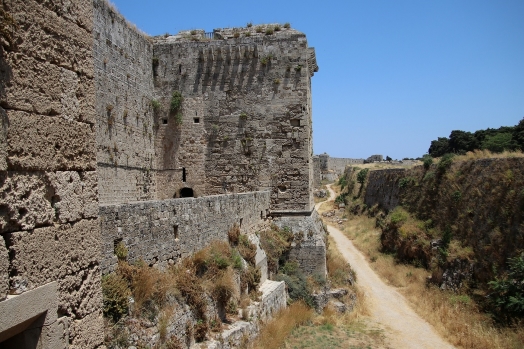
The walls of Rhodes
THE TOUR
This 3-week tour explores the history of the Knights of St John Hospitaller, following their retreat from the Holy Land. The Knights moved bases as geopolitical powers shifted, operating from Cyprus (1291-1310), Rhodes (1310-1522), and famously ruling the island of Malta (1530-1798). Here they successfully defended the island against the Ottoman Empire in the Great Siege of 1565. On each island we will explore the archaeology and history of each region, and see the remarkable military architecture the Knights created.
We begin on the island of Cyprus in the eastern Mediterranean. In 1291, after the Mamelukes conquered Acre in the Levant, the knights retreated to Cyprus. They erected a fortified citadel at Kolossi from which they briefly ruled the island.
We will start our tour in Larnaka. We travel along the south coast to explore some of the fascinating ancient sites. These include the Neolithic settlements of Khirokitia and Tenta, which preserve their distinctive round houses. We also visit the Hellenistic and Roman site of Amathous which has well preserved remains of an agora. The following day we see the Kolossi fort of the Knights of St John Hospitaler. We then head to Kourion, an important city-state with impressive Greco-Roman theatre and private villas with mosaic floors and a bathing complex.
We head westwards to Paphos where we see the Archaeological Park at Kato Pafos (Paphos). Here we explore remains from the Hellenistic to Roman period, including four Roman villas with mosaic floors. We also see the Asklepieion, the Odeon, the Agora and the Saranta Kolones Castle. The following morning we see the Paphos Archaeological Museum which has finds from the Neolithic period to AD 1700. We also see the 'Tombs of the Kings' near Paphos, an elaborate rock-cut necropolis which dates from the 3rd Century BC.
The following morning we head into the Troodos mountains of central Cyprus to see the Monastery of the Virgin Mary at Kikkos. It was founded in the 11th Century. We explore the complex including its museum. In the afternoon we head to Nicosia the Cypriot capital. This city has been inhabited for almost 5000 years. We visit the Cyprus Archaeological Museum and have a walk in the old town which is surrounded by well preserved Venetian walls.
In 1306 the Order of the Knights Hospitaller captured and subsequently ruled from the island of Rhodes, developing a powerful Mediterranean naval fleet to protect Christian shipping from Ottoman encroachment. They would remain for more than 200 years until 1522.
Like the Knights we head to Rhodes (but by plane). On our first afternoon we go for a walk in the walled crusader city built by the Knights of St John of Rhodes. We see the ancient port where the 'Colossus of Rhodes' once stood, and visit the Archaeology Museum which is located in the medieval Hospital of the Knights of St John. The following morning we drive to the spectacular ancient site of Lindos on the east coast of Rhodes which is famous for its ancient acropolis and Temple of Athena. In the afternoon we cross to the western side of Rhodes to see the ruins of ancient Kamiros. We also see some of the ancient Rhodes including a temple of Apollo, a stadium and nymphaeum.
The following day we travel to Turkey for a day trip. The Knights Hospitaller built an impressive Castle of St Peter in Bodrum harbour from 1402 onwards. We take the ferry to Bodrum (ancient Halicarnassus), visiting the ruins of the Tomb of Mausolus (known as the Mausoleum) and also see the ancient theatre. We then explore the Knights Hospitaller Castle which is the setting for the Museum of Underwater Archaeology which contains ther emains of the Ulu Burun and Kas shipwrecks dated to the Late Bronze Age.
Next morning we tour the medieval walled city of Rhodes. We visit the Crusader monuments along the Street of the Knights, explore the centre of the Old Town and its mosques, and see the remarkably preserved walls and moat of the Crusader City. We also visit the Grand Master's Palace, the medieval home of the Knights of St John. The following day is set aside for rest and relaxation. Alternatively, take a ferry to the island of Symi and enjoy a fish lunch overlooking the harbour.
In 1530, after losing Rhodes to the Ottoman Empire, Sultan Suleiman permitted the surviving knights to relocate. They eventually established a new base in Malta, earning the sobriquet "Knights of Malta". In 1565 the Knights successfully withstand the famous Great Siege of Malta against overwhelming Ottoman forces. The Knights founded a new city called Valletta which would have remarkable defences that protected the main harbours. They would control Malta for more than 250 years until the arrival of Napoleon in 1798.
On the following morning, we fly to Malta. In the afternoon we go for a walk around the harbour edge to see the walls of Valletta, built by the Knights of St John Hospitaler to defend the city against Ottoman attack. The following day we visit the cave of Ghar Dalam where we see the remains of prehistoric dwarf elephants and rhinoceroses. At Mnadjara to see a megalithic temple of the 4th Millennium and the nearby temple of Hagar Qim. Later we drive along the coast to see the ancient cart ruts at 'Clapham Junction'.
The following day we visit the National Archaeological Museum in Valletta where we see the superb collection of artefacts covering the history of the island. Mid morning we join a cruise which takes us around the twin harbours of Valletta including Grand Harbour. From the water we see the splendid fortifications built by the Knights of St John Hospitaler.
The next day we see the impressive walls of the mediaeval city of Mdina founded by the Arabs in the 870s. We visit the Museum of Roman antiquities ('the Domus Romana') with its well preserved floor mosaic, statues and household objects. After lunch we explore the atmospheric St Paul's Catacombs - there is some free time to explore the old city or relax in a local café.
On our penultimate day we take a 20 minute ferry trip to the Maltese island of Gozo. We visit the magnificent megalithic temple of Ggantija, one of the oldest manmade structures on earth (5600 years old). We visit the historic citadel of Victoria where we experience the views across the island. Our final day is set aside for a walking tour of Valletta created by the Knights of St John. We start with the Co-Cathedral of St John, then see some of the Auberges which housed the Knights. After lunch we explore the Palace of the Grand Masters and the medieval hospital where the Knights tended the sick. There is time for last minute shopping.
ITINERARY*
Day 1: Arrive LarnakaYou should arrive in Larnaka on the island of Cyprus. Overnight Larnaka.
Day 2: Khirokitia, Kalavassos and Amathous
In the morning we visit the site of Khirokitia, a UNESCO World Heritage site. This is a well-preserved Neolithic walled village where archaeologists have cleared 60 stone houses. We then visit the nearby village of Kalavasos, situated on the Vasiliko River. Here the settlement of Tenta has been cleared - this is a Neolithic settlement dating back to 7000 BC. In the afternoon we visit Amathous, an archaeological which includes an Agora, public baths, the Temple of Aphrodite, early Christian Basilicas and several tombs. Overnight Limassol.
 |
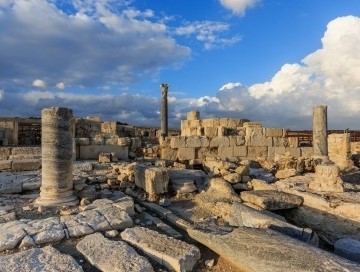 |
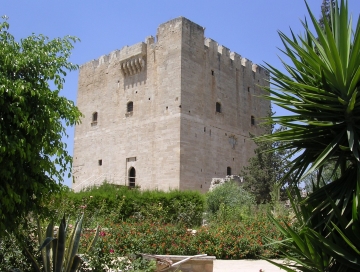
Kolossi castle in Cyprus |
The agora of Kourion |
Day 3: Kolossi Castle, Kourion
In the morning we see the Kolossi fort of the Knights of St John Hospitaler. We then head to the site of Kourion, one of Cyprus' most important city-states. The site includes an impressive Greco-Roman theatre that was built in the 2nd Century BC and extended during the 2nd century AD. We will also see the private villa 'House of Eustolios' where we can see 5th Century mosaic floors and a bathing complex. Other mosaic floors can be found in the 'House of Achilles' and the 'House of the Gladiators'. Overnight Limassol.
Day 4: Paphos
Today we head westwards to Paphos where we see the Archaeological Park at Kato Pafos (Paphos), a UNESCO World Heritage site since 1980. We explore remains from the Hellenistic to Roman period, including four Roman villas with beautiful mosaic floors. In the afternoon we tour the Asklepieion, the Odeon, the Agora and the Saranta Kolones Castle. Overnight Paphos.
 |
 |
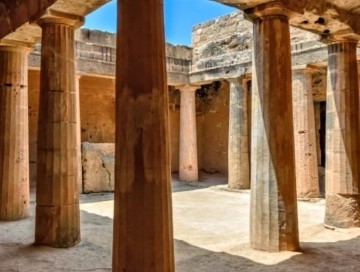
Tombs of the Kings in Paphos |
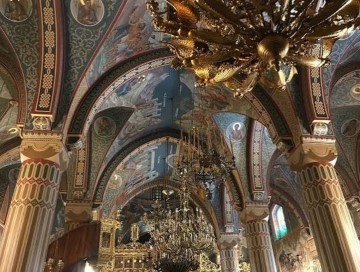
Kikkos Monastery |
Day 5: Paphos
In the morning we see the Paphos Archaeological Museum which has finds from the Neolithic period to AD 1700. We also see the so-called Tombs of the Kings near Paphos, an elaborate rock-cut necropolis which dates from the 3rd Century BC. In the afternoon there is some free time to relax. Overnight Paphos.
Day 6: Monastery of Kikkos
In the morning we head into the Troodos mountains of central Cyprus to see the Monastery of the Virgin Mary at Kikkos, the wealthiest on the island. It was founded in the 11th Century by the Byzantine Emperor Alexios I Komnenos. We explore the complex including its museum. In the afternoon we head to Nicosia. Overnight Nicosia.
Day 7: Nicosia
Today we explore the Cypriot capital of Nicosia. This has been a settlement since the Bronze Age, and has been inhabited for almost 5000 years. We visit the Cyprus Archaeological Museum which has an extensive collection of Cypriot archaeology. We then have a walk in the old town with its well preserved Venetian walls. Overnight Larnaka.
 |
 |
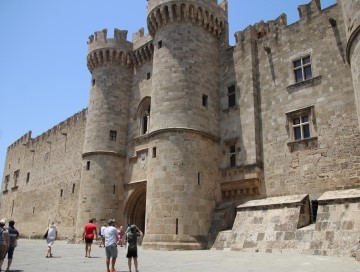
Palace of the Knights in Rhodes |
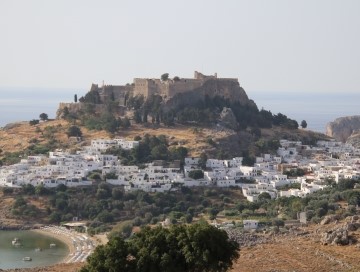
The fortress of Lindos on Rhodes |
Day 8: Fly to Rhodes - Archaeology Museum of Rhodes
In the morning we fly from Larnaka to Rhodes. In the afternoon we go for a walk in the walled crusader city of Rhodes, see the ancient port where the 'Colossus of Rhodes' once stood, and visit the Archaeology Museum which is located in the medieval Hospital of the Knights of St John. Overnight Rhodes.
Day 9: Lindos - Kamiros - ancient Rhodes
In the morning we drive to the spectacular ancient site of Lindos on the east coast of Rhodes. The site is famous for its ancient acropolis and Classical era Temple of Athena. In the afternoon we cross to the western side of the island to see the ruins of the Hellenistic city of Kamiros. We also see some of the ancient remains of the city of Rhodes including a temple of Apollo, the stadium and a nymphaeum at Mt Smith archaeological park. Overnight Rhodes.
Day 10: Bodrum day trip
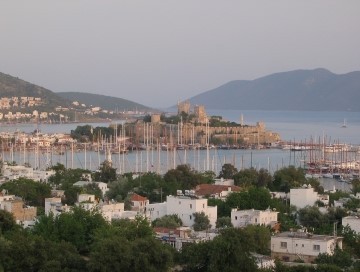
We have a day excursion by ferry to Bodrum (ancient Halicarnassus) on the Turkish mainland. We visit the ruins of the Tomb of Mausolus (known as the Mausoleum) and see the well preserved Hellenistic theatre. In the afternoon we explore the Knights Hospitaller Castle of St Peter and see the Museum of Underwater Archaeology. Overnight Rhodes.
Day 11: Rhodes - city of the Knights of St John
This morning we explore more of the medieval walled city of Rhodes. We visit the Crusader monuments in the Street of the Knights, explore the centre of the Old Town and its mosques, and see the remarkably preserved walls and moat of the Crusader City. We also explore the Grand Master's Palace, the medieval home of the Knights of St John which was reconstructed in the 20th Century. Overnight Rhodes.
 |
 |
Castle of the Knights in Bodrum harbour |
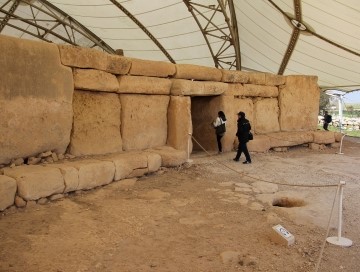
Hagar Qim temple |
Day 12: Free day in Rhodes - possible cruise to Symi Island
This day is set aside for rest and relaxation. Take a walk in the old city, explore the shops, or just read a book. Alternatively, take a ferry to the nearby island of Symi and enjoy a fish lunch overlooking the harbour. Overnight Rhodes.
Day 13: Valletta
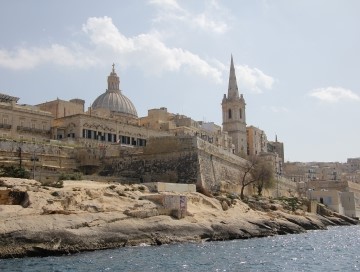
In the morning we fly to Athens and then onwards to Valletta (capital of Malta). We check into our hotel then go for a walk around the harbour edge to see the walls of Valletta, built in the 16th Century by the Knights of St John Hospitaler to defend the city against Ottoman attack. Overnight Valletta.
Day 14: Ghar Dalam - Mnadjara - Hagar Qim - 'Clapham Junction'
In the morning we head by bus to the south of Malta to visit the cave of Ghar Dalam where we see the remains of prehistoric dwarf elephants and rhinoceroses. We then head to Mnadjara to see a megalithic temple of the 4th Millennium BC and the nearby temple of Hagar Qim. We have some lunch at a local café. In the afternoon we drive along the coast and see the physical evidence of ancient cart ruts at 'Clapham Junction'. Overnight Valletta.
Day 15: Valletta - Museum - cruise around Grand Harbour
In the morning we visit the National Archaeological Museum in Valletta where we see the superb collection of artefacts covering the history of the island. Mid morning we join a boat cruise which takes us around the twin harbours of Valletta; Marxamxett and Grand Harbour. We see the splendid fortifications built by the Knights of St John Hospitaler in the 16th Century. Overnight Valletta.
 |
 |
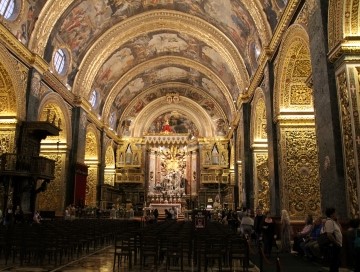
The co-cathedral of St John in Valletta |
The walls of the Knights in Valletta |
Day 16: Mdina - Domus Romana Roman Museum - St Paul's catacombs
In the morning we head west of Valletta, stopping to see the impressive walls of the mediaeval city of Mdina. We visit the Museum of Roman antiquities (known as the Domus Romana) with its well preserved floor mosaic, statues and household objects. We have some lunch and then explore the atmospheric St Paul's Catacombs - there is some free time to explore the old city or relax in a local café. Overnight Valletta.
Day 17: Gozo - Ggantija Temple - Victoria old city
We drive by bus to the west of Malta where we take a 20 minute ferry trip to the island of Gozo. Here we visit the magnificent megalithic temple of Ggantija, one of the oldest manmade structures on earth (5600 years old). We visit the historic citadel of Victoria where we experience the wonderful views across the island. Overnight Valletta.
Day 18: Valletta - St John's Co-Cathedral - Grand Master's Palace - Hospital
The day is set aside for a walking tour of the walled city of Valletta created by the Knights of St John. Our visit starts with the Co-Cathedral of St John, a gem of Baroque architecture. We see some of the Auberges which housed the Knights. After lunch we explore the Palace of the Grand Masters which is richly endowed with frescoes and tapestries. We also see the medieval hospital where the Knights tended the sick. Overnight Valletta.
Day 19: Departure from Valletta
Departure from Valletta.
* Please note that the Company reserves the right to make alterations to the itinerary in the period up to 60 days prior to a tour departure. The itinerary may also be subject to minor re-arrangement due to the scheduling of the operators and availability of access. If this occurs, the Company will endeavour to provide a comparable alternative.